Contacts

Unit 863, Cospacio: Premium Coworking, 8th Floor, Celica Park, 24, Park Street Park Center, Kolkata, West Bengal 700016

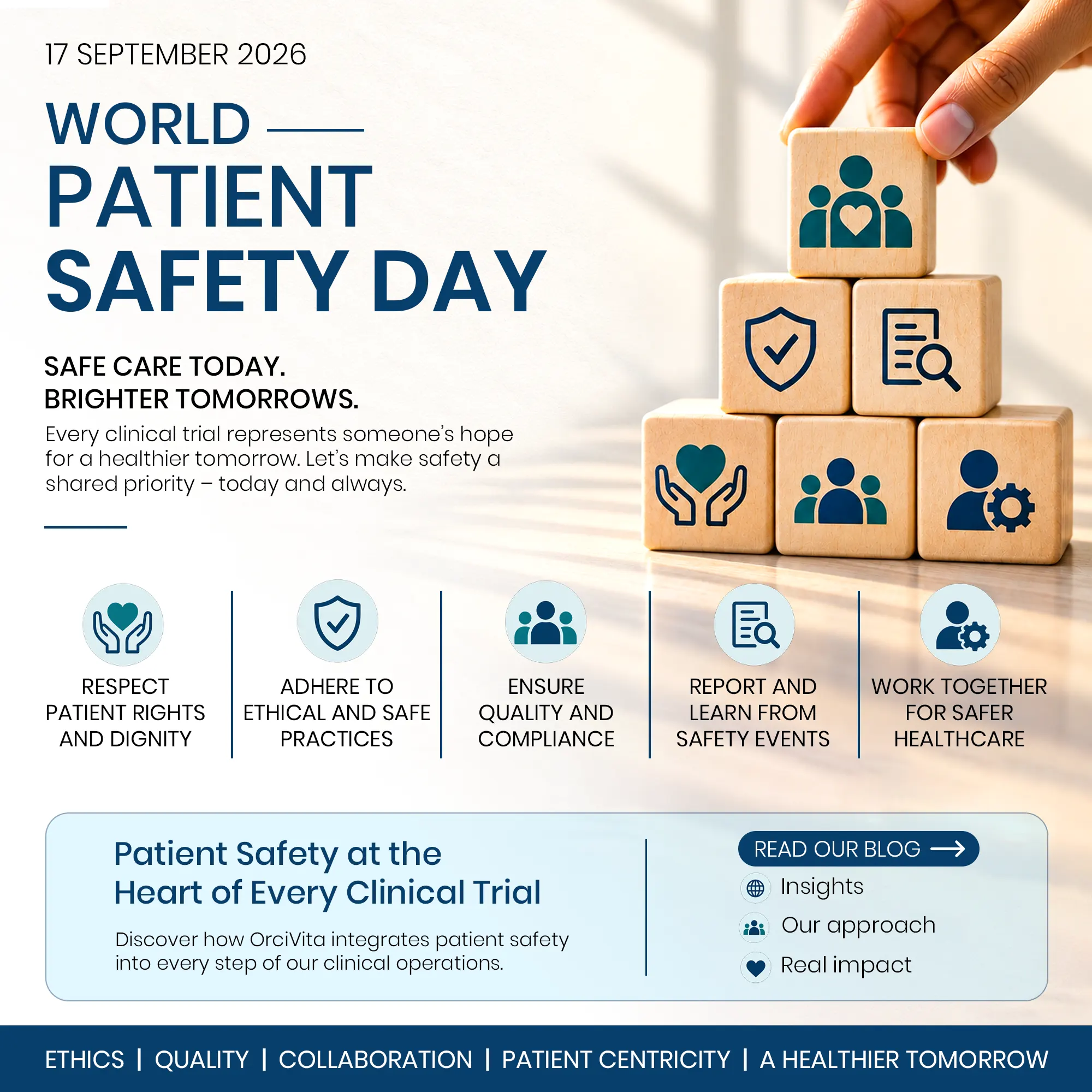
World Patient Safety Day 2026: Patient Safety at the Heart of Every Clinical Trial

Every clinical trial begins with a scientific question. But behind every protocol, every visit, every laboratory result and every data point is a person who has placed their trust in research.

On World Patient Safety Day, OrciVita Sciences & Research Pvt. Ltd. reaffirms a principle that guides our clinical operations every day: the rights, safety, dignity and well-being of research participants must always come first.

For us, patient safety is not an activity limited to adverse event reporting. It is a continuous responsibility that begins before the first participant is screened and continues until the study is completed, closed and appropriately archived.

Patient Safety Begins Before Recruitment

Safe clinical research starts with preparation.

Before a study begins at a site, our teams work closely with investigators and site personnel to understand the protocol, eligibility criteria, investigational product or device, safety requirements, visit schedules and study-specific procedures.

Site feasibility and preparedness are assessed carefully. During study initiation, teams are trained on the protocol, informed consent process, safety reporting requirements, documentation standards and participant management.

The objective is simple: identify potential risks before they can affect a participant.

Informed Consent: Respecting the Patient’s Right to Decide

Participation in clinical research must always be voluntary and informed.

OrciVita emphasizes an appropriate informed consent process in which potential participants are given adequate information about the study, its procedures, foreseeable risks and benefits, available alternatives and their rights as research participants.

Consent is more than a signature on a document. It is a process of communication, understanding and respect.

Participants must also understand that they have the right to ask questions and to withdraw from a study in accordance with applicable requirements without compromising their dignity or appropriate medical care.

Safety Through Appropriate Patient Selection

Eligibility criteria exist for scientific as well as safety reasons.

Our clinical operations teams support investigators in careful screening and verification of inclusion and exclusion criteria before enrolment. Relevant medical history, concomitant medications, laboratory parameters and other protocol-defined assessments are reviewed and documented as required.

This helps ensure that participants are enrolled appropriately and that avoidable risks are minimized.

Vigilance at Every Patient Visit

Patient safety does not stop after enrolment.

Throughout a study, our site teams support protocol-compliant patient visits, scheduled assessments, follow-up requirements and documentation.

Clinical findings and potential safety concerns are brought to the investigator’s attention, while adverse events and serious adverse events are documented, followed up and reported within applicable timelines according to the protocol, regulatory requirements and study procedures.

Timely recognition. Accurate documentation. Appropriate escalation. Continuous follow-up.

These are fundamental components of responsible clinical trial conduct.

Protocol Compliance Protects Patients

A protocol is not merely an operational document. Many of its requirements are designed specifically to protect participants.

Visit windows, laboratory assessments, dose modifications, prohibited medications, discontinuation criteria and safety monitoring requirements can all have direct implications for participant well-being.

Our clinical operations teams therefore focus strongly on protocol adherence while identifying, documenting and escalating deviations when they occur.

Quality Data Supports Patient Safety

High-quality clinical data and patient safety are closely connected.

Incomplete documentation, delayed data entry or unresolved discrepancies may affect the ability of investigators and sponsors to identify safety trends.

OrciVita emphasizes timely source documentation, EDC entry, query resolution, reconciliation and quality review so that study data accurately reflect what happened to the participant.

Our dedicated Quality Assurance and Quality Control processes further strengthen oversight by identifying gaps, supporting corrective and preventive actions, and encouraging continuous improvement across clinical operations.

Investigational Product and Device Accountabilit

Proper handling of investigational products and medical devices is another important component of participant protection.

Our teams support sites with appropriate receipt, storage, temperature monitoring, dispensing documentation, accountability, reconciliation and return or destruction procedures according to study requirements.

Any discrepancy or excursion requiring evaluation is escalated through the appropriate study channels.

Ethics and Regulatory Compliance

Ethics Committees play a critical role in protecting research participants.

Our regulatory and clinical operations teams facilitate timely submissions of study documents, amendments, safety information, protocol deviations and other required communications to Ethics Committees and relevant stakeholders.

We believe that ethical oversight should never be treated merely as an administrative requirement. It is an essential safeguard for the people participating in research.

Patient Safety Is a Team Responsibility

No single person can ensure patient safety alone.

It requires collaboration between participants, investigators, study coordinators, Ethics Committees, sponsors, CROs, laboratories, pharmacists, monitors, safety teams and regulatory authorities.

At OrciVita, we therefore work to create a culture where team members are encouraged to identify concerns early, communicate clearly, escalate appropriately and learn from deviations and safety events.

From Compliance to Culture

Regulations, SOPs and checklists provide the framework for safe clinical research. But true patient safety requires something more—a culture of responsibility.

It means asking at every stage:

Is the participant adequately informed?
Is this procedure necessary and protocol compliant?
Has a potential safety concern been identified?
Has it been communicated to the right person?
Is the documentation complete?
Have we followed up appropriately?

When these questions become part of everyday clinical operations, patient safety moves beyond compliance and becomes part of organizational culture.

Our Commitment

Having supported 60+ clinical trials across multiple therapeutic areas and sites, OrciVita continues to strengthen its systems, people, training and quality processes with one central objective: conducting research responsibly while protecting the people who make medical advancement possible.

This World Patient Safety Day, we reaffirm our commitment to:

Respect patient rights and dignity.
Conduct ethical and responsible research.
Recognize and report safety concerns promptly.
Maintain quality and regulatory compliance.
Promote transparency and accountability.
Continuously train our clinical research teams.
Keep patients at the centre of every decision.

Because clinical research is ultimately not just about generating evidence.

It is about generating evidence responsibly.

And behind every data point is a person who has placed their trust in research.

OrciVita Sciences & Research Pvt. Ltd.

Research for a Healthier Tomorrow

People. Science. Better Tomorrows.
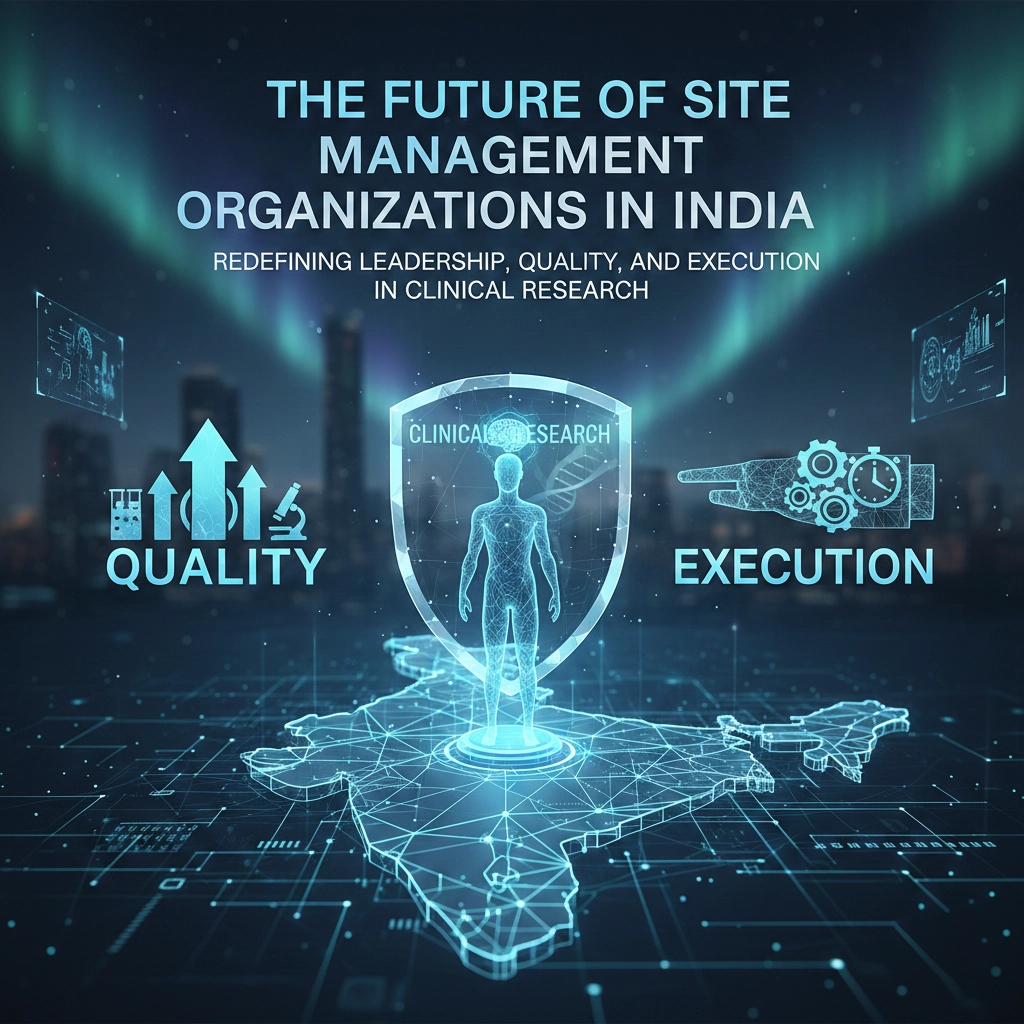
The Future of Site Management Organizations in India Redefining Leadership, Quality, and Execution in Clinical Research

India is rapidly emerging as a global hub for clinical research, driven by its diverse patient population, skilled investigators, and evolving regulatory ecosystem. At the heart of this transformation lies the Site Management Organization (SMO)—no longer just an operational support function, but a strategic partner shaping the success of clinical trials. The future of SMOs in India will be defined by leadership, specialization, quality maturity, and technology-enabled execution.

From Operational Support to Strategic Leadership

Traditionally, SMOs were seen as extensions of site operations, focused mainly on coordination and documentation. Today, this role is expanding significantly. Future-ready SMOs will act as strategic leaders—guiding sites through feasibility decisions, optimizing patient recruitment strategies, strengthening investigator engagement, and ensuring sustainable trial conduct. Leadership-driven SMOs will influence trial outcomes long before the first patient is enrolled.

Specialized Teams for a Complex Trial Landscape

Clinical trials are becoming increasingly complex, with adaptive designs, decentralized elements, and stringent regulatory expectations. The SMO of the future will be built on specialized, independent teams—dedicated feasibility units, study start-up experts, clinical operations professionals, and quality & compliance departments. This specialization ensures deeper expertise, faster decision-making, and reduced operational risk across the trial lifecycle.

Quality as a Culture, Not a Checklist

As India continues to attract global sponsors, quality expectations are rising. Future SMOs will move beyond reactive compliance to embed quality as a culture. Independent Quality & Compliance departments, strong SOP frameworks, GDP practices, and adherence to ALCOA++ principles will become non-negotiable. Proactive internal audits, real-time quality oversight, and inspection readiness will define credibility and trust in the global arena.

Technology-Enabled, Data-Driven Operations

Digital transformation will play a pivotal role in the evolution of SMOs. The future lies in leveraging CTMS platforms, feasibility analytics, centralized document management, and performance dashboards. Data-driven insights will support better site selection, realistic recruitment forecasting, and continuous performance improvement—allowing SMOs to shift from reactive problem-solving to predictive planning.

Strengthening Investigator and Site Ecosystems

India’s clinical research growth depends on empowered investigators and well-supported sites. Future SMOs will act as long-term partners—investing in site training, mentoring study teams, and building operational maturity at the grassroots level. By nurturing sustainable site ecosystems, SMOs will help expand India’s research footprint beyond metros into emerging regions.

OrciVita’s Vision for the Future

At OrciVita, we believe the future of SMOs in India is leadership-driven, quality-anchored, and execution-focused. With independent feasibility and study start-up teams, a dedicated Quality & Compliance department, and strong clinical operations expertise, we are committed to shaping trials that are efficient, ethical, and impactful. Our vision is to not just support clinical research—but to elevate how it is conducted across India.

Looking Ahead

The next decade will redefine the role of SMOs in India. Those who embrace specialization, quality leadership, and innovation will set new benchmarks for excellence. As clinical research continues to evolve, SMOs like OrciVita will remain central to building trust, delivering results, and positioning India as a preferred destination for global clinical trials.


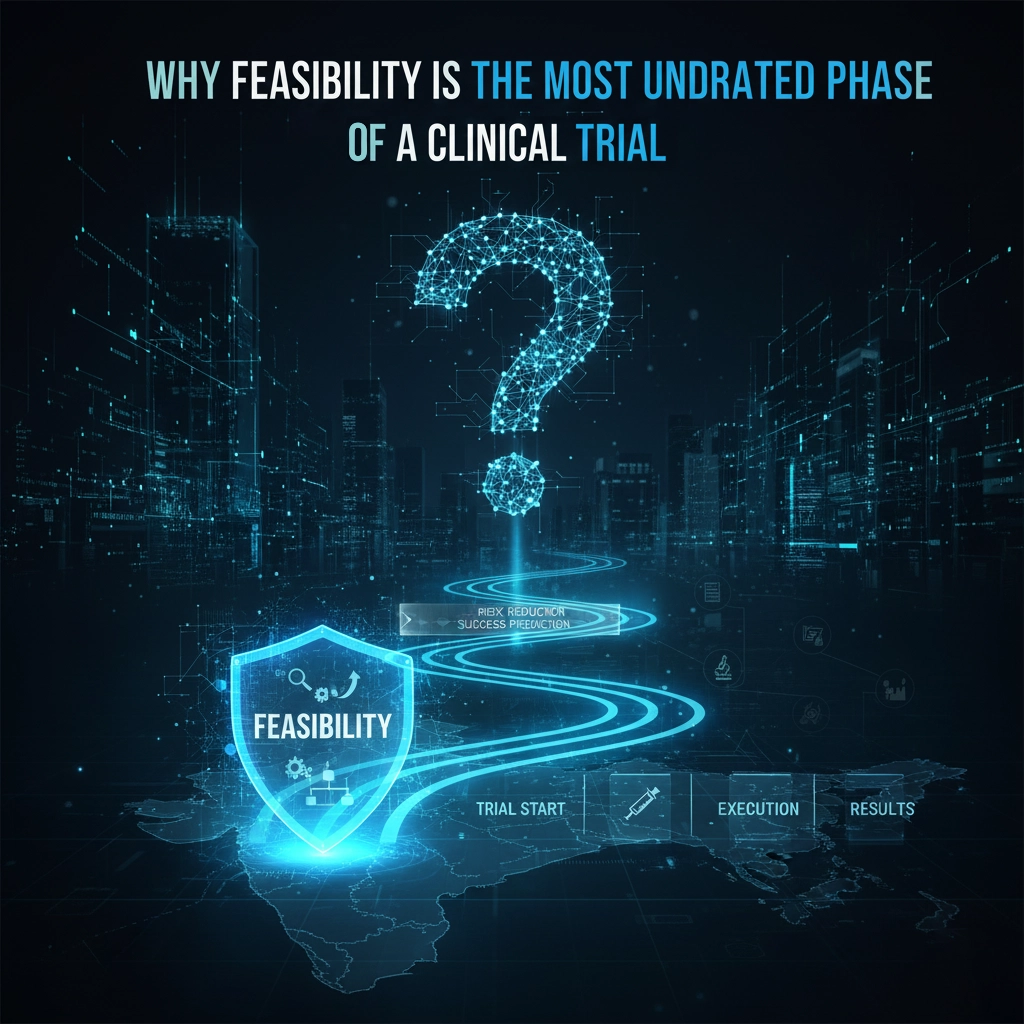
Why Feasibility Is the Most Underrated Phase of a Clinical Trial

In clinical research, timelines, recruitment targets, and data quality often dominate discussions—but one critical phase quietly determines the fate of a trial long before the first patient is enrolled: feasibility. Despite its importance, feasibility is frequently underestimated or treated as a checkbox exercise. At OrciVita Sciences & Research Pvt. Ltd., we view feasibility as the foundation on which successful clinical trials are built.

Feasibility Sets the Reality Check

A protocol may look perfect on paper, but real-world execution depends on ground realities at the site level. Feasibility is where assumptions meet reality—patient availability, investigator bandwidth, infrastructure readiness, and competing studies all come into focus. Without a robust feasibility assessment, trials risk delayed start-up, poor recruitment, protocol deviations, and premature termination. A strong feasibility process prevents avoidable surprises later in the study lifecycle.

Why a Dedicated Feasibility Team Matters

At OrciVita, feasibility and study start-up are managed by a dedicated, specialized team, separate from routine clinical operations. This focused approach allows our feasibility experts to deep-dive into protocol requirements without operational distractions. The team evaluates patient populations, standard of care, investigator interest, site workload, and regulatory readiness in a structured manner. This independence ensures unbiased, accurate feasibility insights that sponsors and CROs can rely on.

Beyond Patient Numbers: Holistic Site Readiness

True feasibility goes far beyond estimating patient numbers. OrciVita’s feasibility assessments include investigator experience, site infrastructure, staffing availability, diagnostic capabilities, and ethical oversight readiness. Regulatory and ethics committee requirements are reviewed early to identify potential bottlenecks. By assessing the complete operational ecosystem, we ensure that selected sites are not just willing—but truly capable—of conducting the study successfully.

Reducing Study Start-Up Timelines Through Feasibility

One of the biggest advantages of a strong feasibility process is faster and smoother study start-up. Early identification of gaps allows proactive planning, timely documentation, and parallel processing of submissions. OrciVita’s Feasibility & Study Start-Up team works closely with Clinical Operations and Quality while maintaining functional independence. This coordination reduces rework, minimizes delays, and accelerates first patient in (FPI).

Feasibility as a Risk-Mitigation Tool

Feasibility is also a powerful risk-management tool. By identifying potential recruitment challenges, compliance risks, and operational constraints upfront, sponsors can make informed decisions about site selection and study design adjustments. This reduces downstream risks such as protocol amendments, extended timelines, and cost overruns. At OrciVita, feasibility is not about optimism—it is about accuracy and preparedness.

Why Feasibility Deserves More Attention

As clinical trials grow more complex and competitive, the margin for error continues to shrink. Feasibility is no longer a preliminary step—it is a strategic phase that directly impacts trial success. Investing time and expertise in feasibility saves months of delays and significant resources later. At OrciVita, we believe that a well-executed feasibility is the first milestone of a successful clinical trial.

Why OrciVita’s Feasibility Is Different

At OrciVita, feasibility is not an administrative task—it is a strategic, independent function managed by a dedicated Feasibility & Study Start-Up team. Our feasibility assessments are grounded in real-world site data, investigator engagement, and patient flow analysis, not optimistic assumptions. We evaluate feasibility through a 360-degree lens, covering patient availability, investigator bandwidth, infrastructure readiness, regulatory pathways, and ethics committee timelines. Close coordination with our Clinical Operations and independent Quality teams ensures that feasibility insights translate seamlessly into compliant and efficient study start-up. This structured, data-driven approach enables sponsors and CROs to make confident site selection decisions and significantly reduces downstream risks.

Strong trials don’t start with recruitment—they start with feasibility done right.