

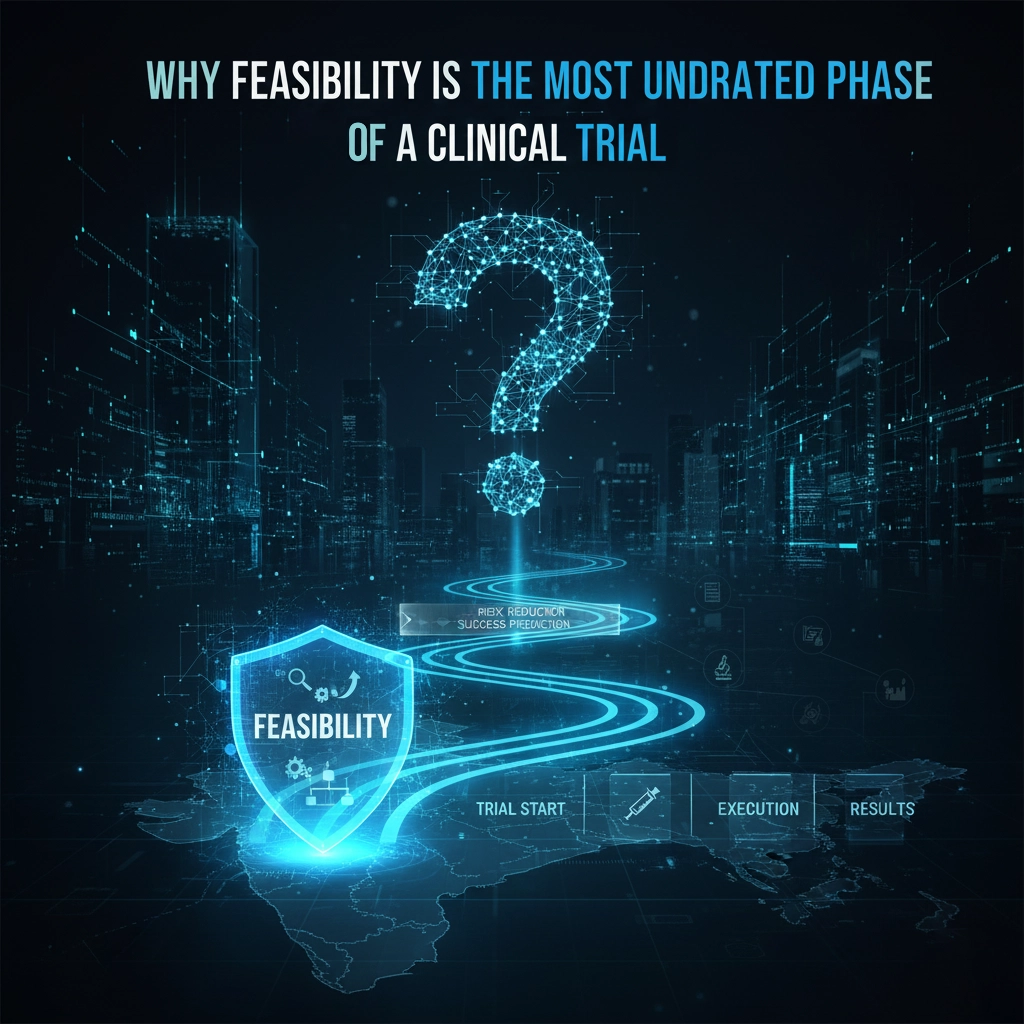
In clinical research, timelines, recruitment targets, and data quality often dominate discussions—but one critical phase quietly determines the fate of a trial long before the first patient is enrolled: feasibility. Despite its importance, feasibility is frequently underestimated or treated as a checkbox exercise. At OrciVita Sciences & Research Pvt. Ltd., we view feasibility as the foundation on which successful clinical trials are built.
Feasibility Sets the Reality Check
A protocol may look perfect on paper, but real-world execution depends on ground realities at the site level. Feasibility is where assumptions meet reality—patient availability, investigator bandwidth, infrastructure readiness, and competing studies all come into focus. Without a robust feasibility assessment, trials risk delayed start-up, poor recruitment, protocol deviations, and premature termination. A strong feasibility process prevents avoidable surprises later in the study lifecycle.
Why a Dedicated Feasibility Team Matters
At OrciVita, feasibility and study start-up are managed by a dedicated, specialized team, separate from routine clinical operations. This focused approach allows our feasibility experts to deep-dive into protocol requirements without operational distractions. The team evaluates patient populations, standard of care, investigator interest, site workload, and regulatory readiness in a structured manner. This independence ensures unbiased, accurate feasibility insights that sponsors and CROs can rely on.
Beyond Patient Numbers: Holistic Site Readiness
True feasibility goes far beyond estimating patient numbers. OrciVita’s feasibility assessments include investigator experience, site infrastructure, staffing availability, diagnostic capabilities, and ethical oversight readiness. Regulatory and ethics committee requirements are reviewed early to identify potential bottlenecks. By assessing the complete operational ecosystem, we ensure that selected sites are not just willing—but truly capable—of conducting the study successfully.
Reducing Study Start-Up Timelines Through Feasibility
One of the biggest advantages of a strong feasibility process is faster and smoother study start-up. Early identification of gaps allows proactive planning, timely documentation, and parallel processing of submissions. OrciVita’s Feasibility & Study Start-Up team works closely with Clinical Operations and Quality while maintaining functional independence. This coordination reduces rework, minimizes delays, and accelerates first patient in (FPI).
Feasibility as a Risk-Mitigation Tool
Feasibility is also a powerful risk-management tool. By identifying potential recruitment challenges, compliance risks, and operational constraints upfront, sponsors can make informed decisions about site selection and study design adjustments. This reduces downstream risks such as protocol amendments, extended timelines, and cost overruns. At OrciVita, feasibility is not about optimism—it is about accuracy and preparedness.
Why Feasibility Deserves More Attention
As clinical trials grow more complex and competitive, the margin for error continues to shrink. Feasibility is no longer a preliminary step—it is a strategic phase that directly impacts trial success. Investing time and expertise in feasibility saves months of delays and significant resources later. At OrciVita, we believe that a well-executed feasibility is the first milestone of a successful clinical trial.
Why OrciVita’s Feasibility Is Different
At OrciVita, feasibility is not an administrative task—it is a strategic, independent function managed by a dedicated Feasibility & Study Start-Up team. Our feasibility assessments are grounded in real-world site data, investigator engagement, and patient flow analysis, not optimistic assumptions. We evaluate feasibility through a 360-degree lens, covering patient availability, investigator bandwidth, infrastructure readiness, regulatory pathways, and ethics committee timelines. Close coordination with our Clinical Operations and independent Quality teams ensures that feasibility insights translate seamlessly into compliant and efficient study start-up. This structured, data-driven approach enables sponsors and CROs to make confident site selection decisions and significantly reduces downstream risks.
Strong trials don’t start with recruitment—they start with feasibility done right.